
-
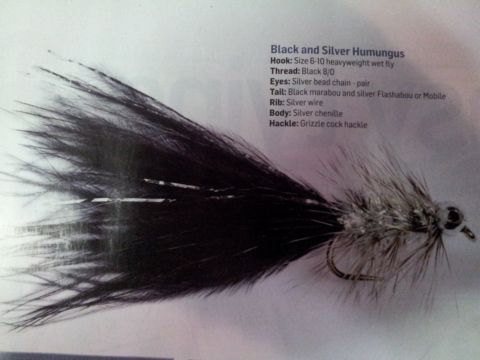
The humungus lure is based on the classic long-tail tadpole that is an incredibly successful fly across the UK still waters. Traditionally it’s tied using bead chain eyes but as I am at this stage tying flies for the Commonwealths that are being held in Canada later this year I have tied it here with a 3.5mm silver tungsten bead which is of course is legal for competition fishing where the bead chain eyes are not.
- Most beads have a large opening at one end and a smaller opening at the other. Slide a bead over the point of the hook small opening first and position it behind the eye of the hook.
- Wind the thread in touching turns from behind the bead to the bend of the hook.
- If your going to add extra weight do that now. I always add 5 wraps of 0.15 mm lead wire to my size #8 olive buggers and 5 wraps of 0.10 lead wire to my #10 olive buggers just to ensure that they have negative buoyancy and to create a little drag during the retrieve to ensure that I am in contact with the fly.
- Tie in a tail about twice as long as the hook. Resist the temptation to make the tail too bulky or too short.
- Its optional but I find that on dull water a couple of strands of sparkle flash álong the side of the tail help. If you adding sparkle flash for a size #8 olive bugger add just 1 or 2 strands each side and for smaller olive bugger just one strand is plenty.
- Tie in a length of copper wire.
- Tie in a number of peacock hearls, form them into a rope and wind the rope forward in touching turns to the bead forming a uniform body.
- Tie the herl rope off and trim the excess.
- Select a body hackle with barbules about as long as the gape of the hook and tie it in at the 95% position.
- Palmer the hackle down the body to the bend of the hook creating 3 nor 4 segments along the body of the fly.
- Whilst holding the hackle in place at the bend of the hook with your left hand pick up the wire with your right hand and wind the wire forward forming just 3 or 4 segments along the body of the fly.
- Tie the copper wire off behind the bead and worry off the excess wire.
- Trim away the excess body hackle with a blade.
- Select a front hackle that has barbels that are around 1.5 times as long as the gape of the hook.
- Tie that hackle in by the tip.
- Trim the tip of where the hackle is tied in also with a blade.
- Take just 1 or 2 full turns of the hackle just behind the eye of the hook and secure it in place with a few wraps of thread.
- Stroke the hackle tips back along the fly and then finish securing the hackle in that position with additional wraps of thread.
- Whip finish and varnish the collar and the bead if it is not already pained or coated.
Typically these days the body is tied using a metallic silver or gold chenille but a really good alternative body material is angel hair.
To see how I have done that have a look at the black and gold humungus.
 |
Materials
| Hook | Head / weight | Thread | Tail | Rib | Body | Hackle |
|---|---|---|---|---|---|---|
| #8 or #10 Tiemco 3769 SPBL | Tungsten bead. If you need a heavier fly add wraps of lead wire to the front half of the hook shank before dressing the body. | Black | Black marabou with a couple of strands of silver Flashabou | Fine silver wire | Metallic silver chenille | Grizzly cock hackle – this seems to be optional these days |
Process
| A |
See [[Understanding hooks]] See [[Adding weight to a fly]] See [[Lighter than a woolly bugger tail]] |
 |
|---|
| B |
See [[Roping peacock herl]] |
 |
|---|
| C |
See [[Body segments on flies]] See [[Woolly bugger hackles]] |
 |
|---|
| D |
|
 |
|---|
| E |
|
 |
|---|